Fusion 360Rhinoceros / GrasshopperRaspberry Pi Pico3D PrintingLaser CuttingDFPlayer Pro
Concept
The interaction unfolds through the act of opening
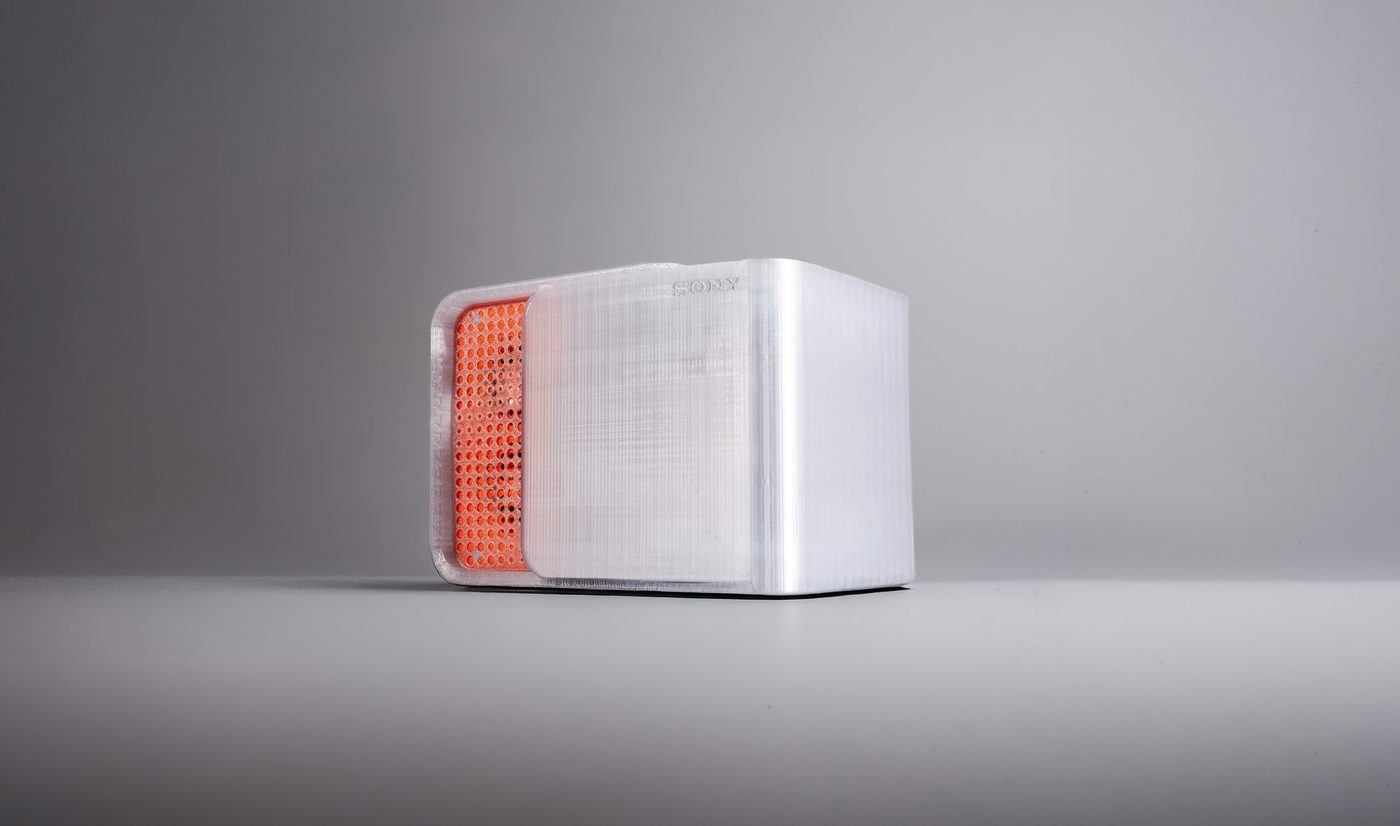
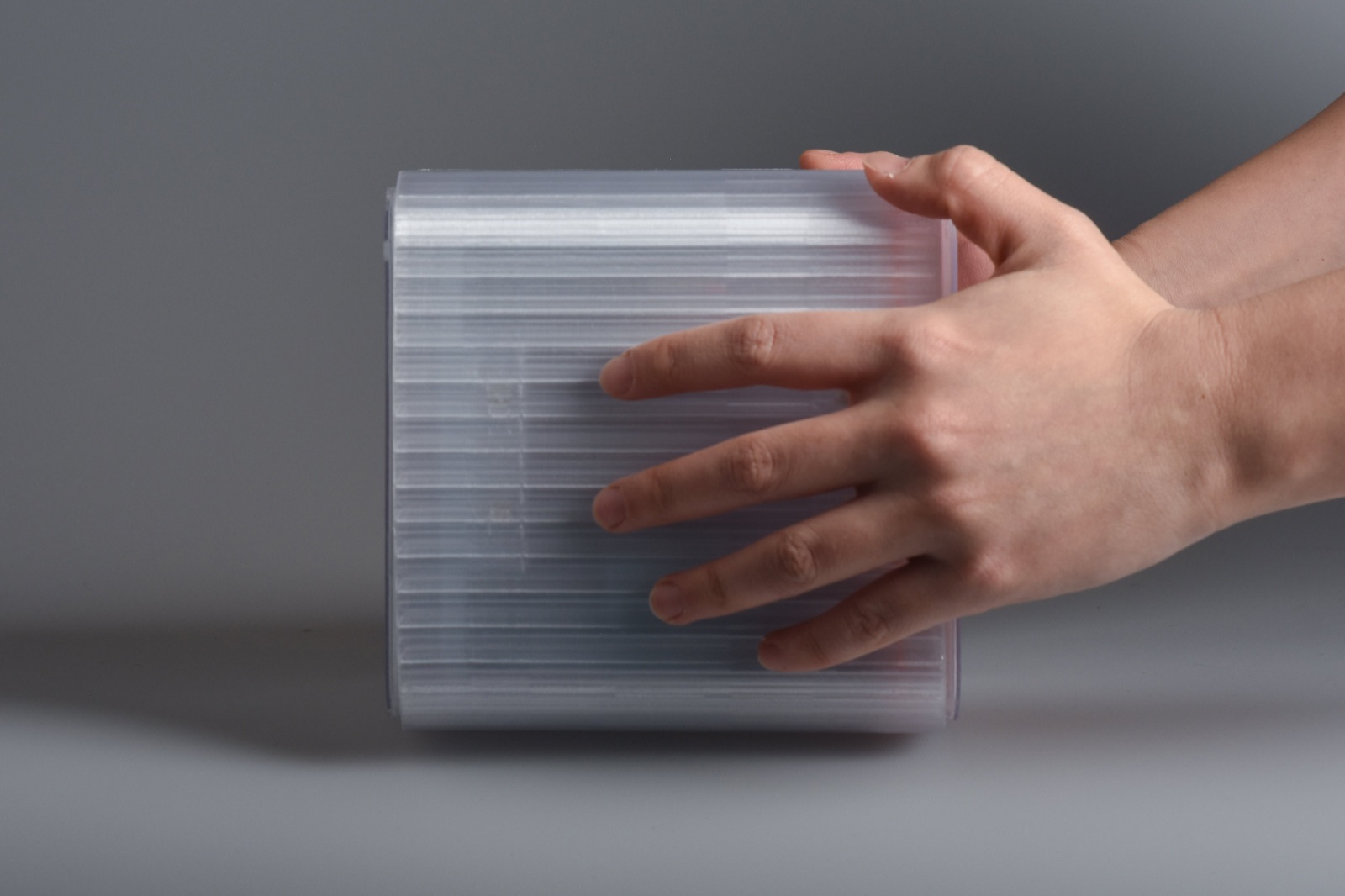
The Sony TR-1825, released in 1970, is a portable radio built around a single physical act: sliding the cube open. That movement simultaneously reveals the speaker, exposes the controls, and powers the device. There is no mode to enter, no button to find first. The object tells you what to do by the way it is shaped.
The project does not attempt to replicate the original visually. It asks instead whether the interaction logic can survive translation into a different medium. The answer required designing a custom rail and stopper system from the inside out: a geometry stable enough for 3D printing, precise enough to reproduce the original sliding motion, and compact enough to leave room for the electronics within a 150mm cube.
The Interaction
01
Closed
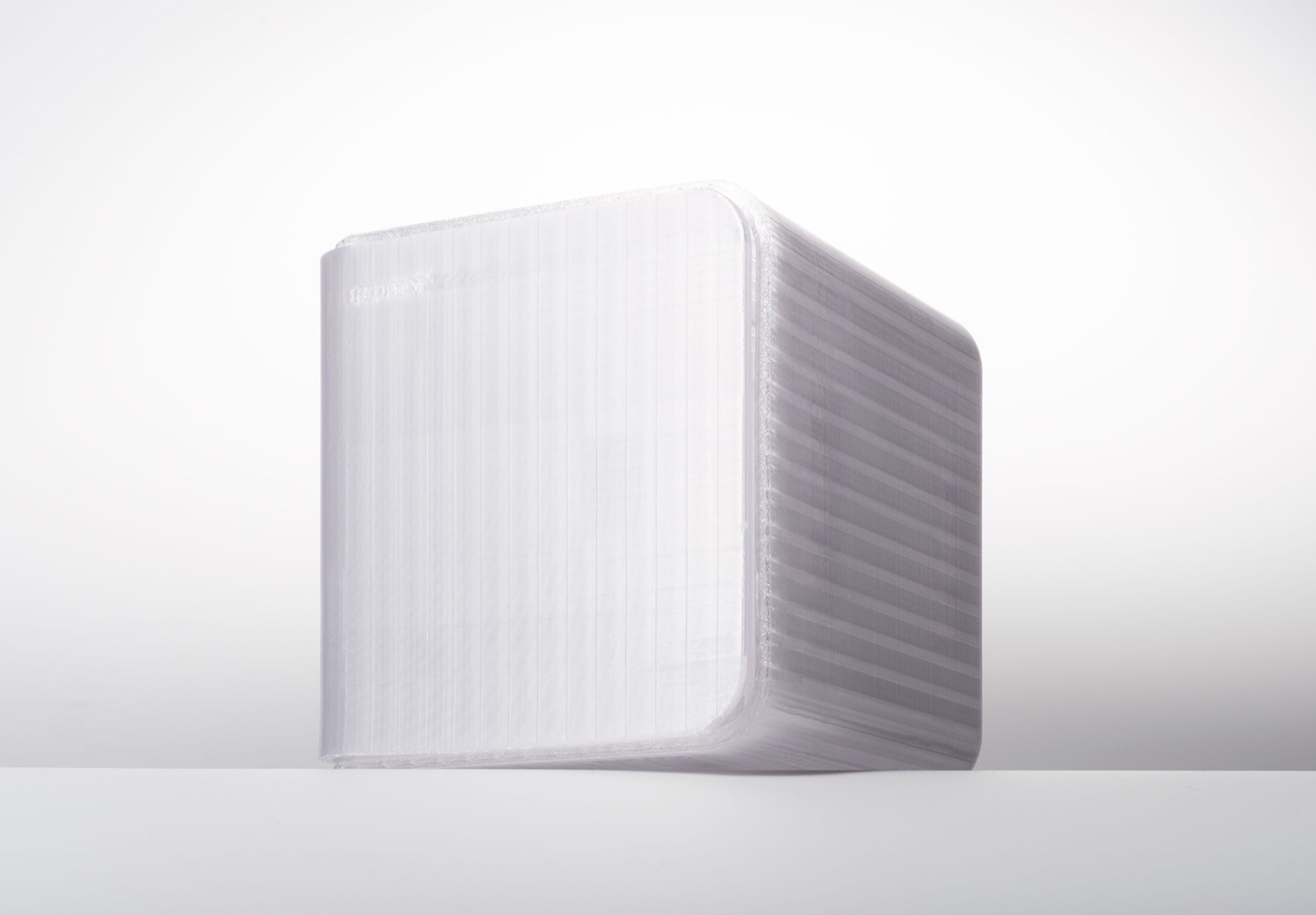
A compact 150mm enclosure with no visible controls or exposed speaker. The interaction surface remains fully concealed.
02
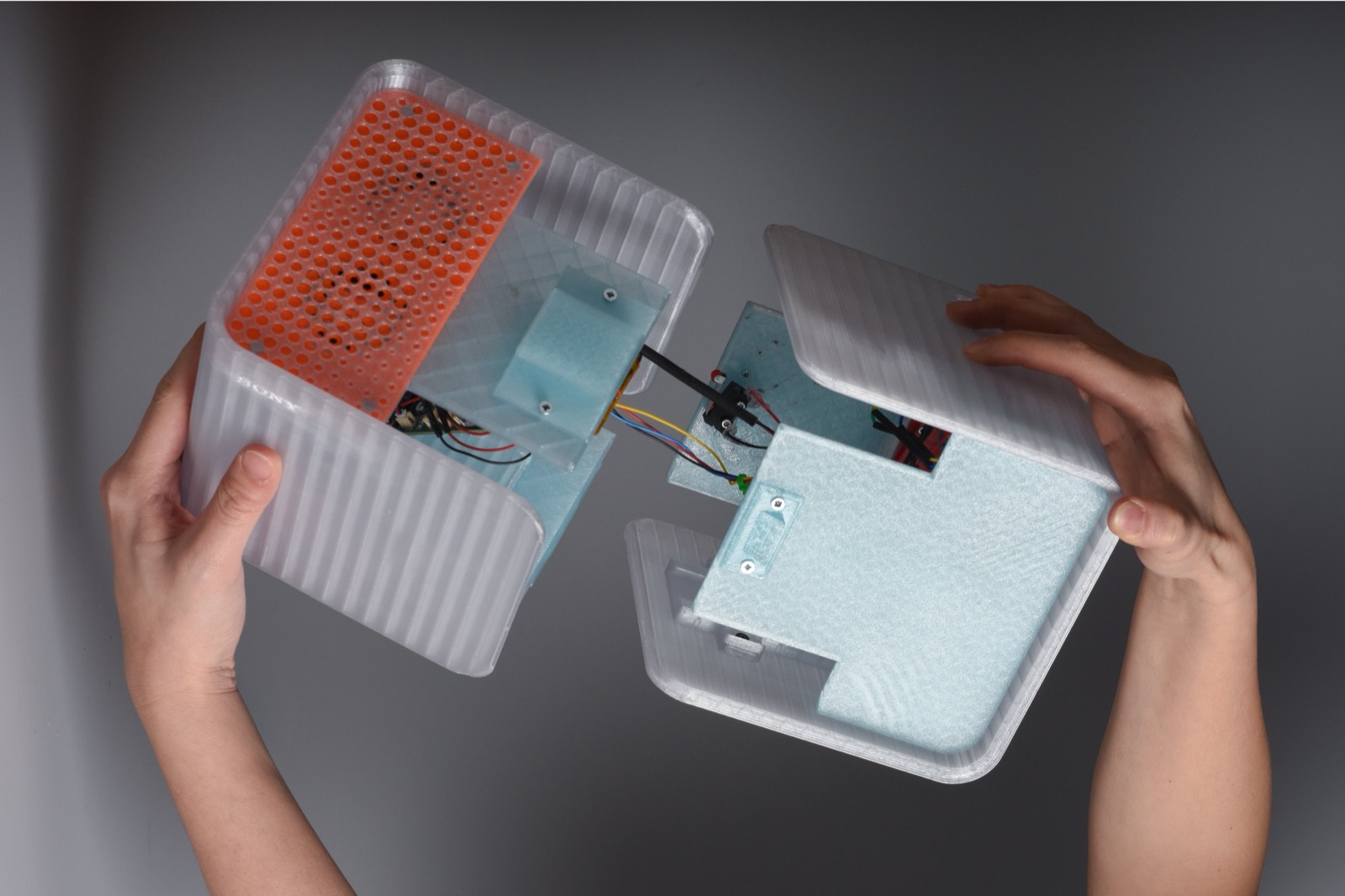
Opening
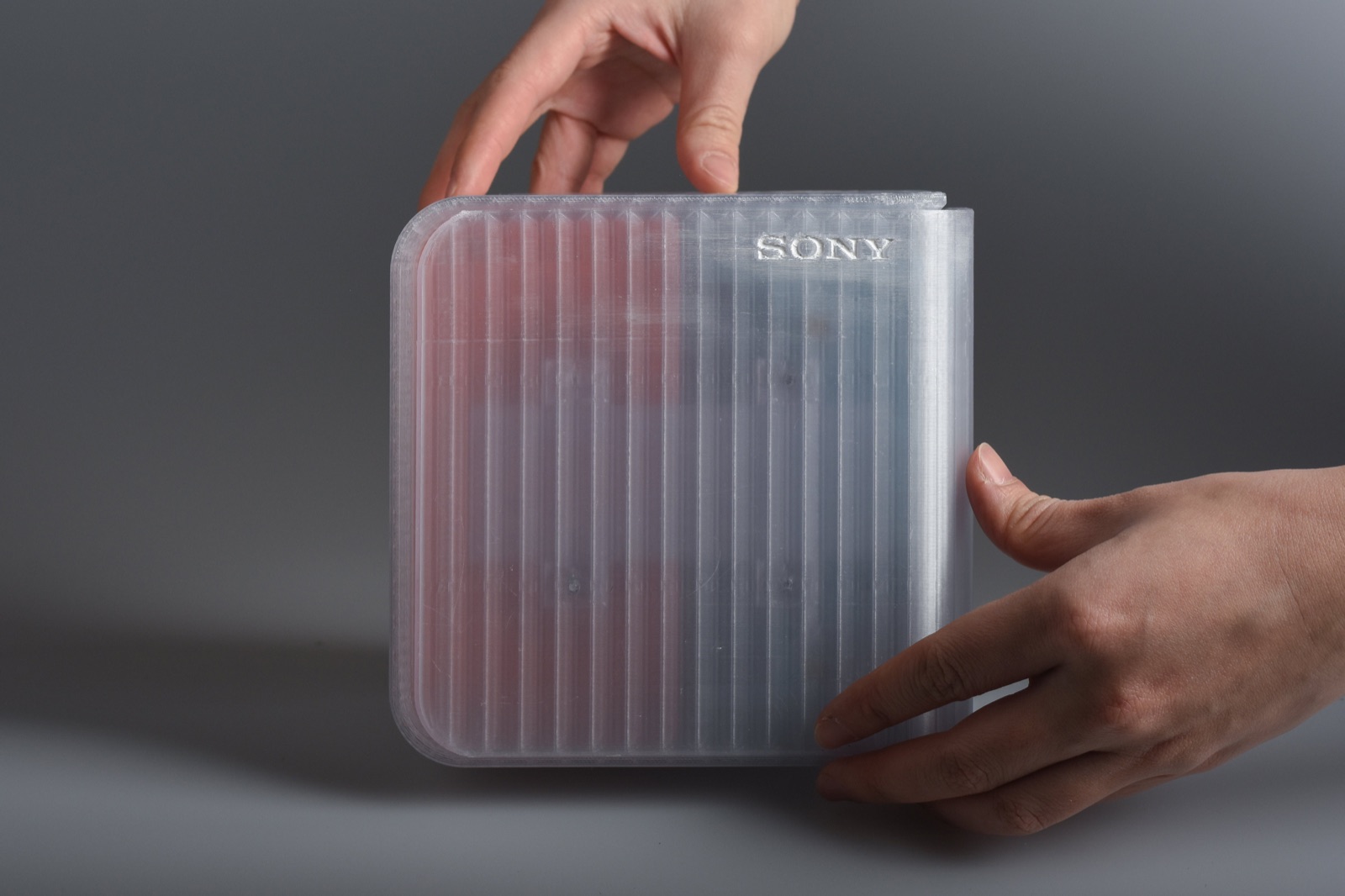
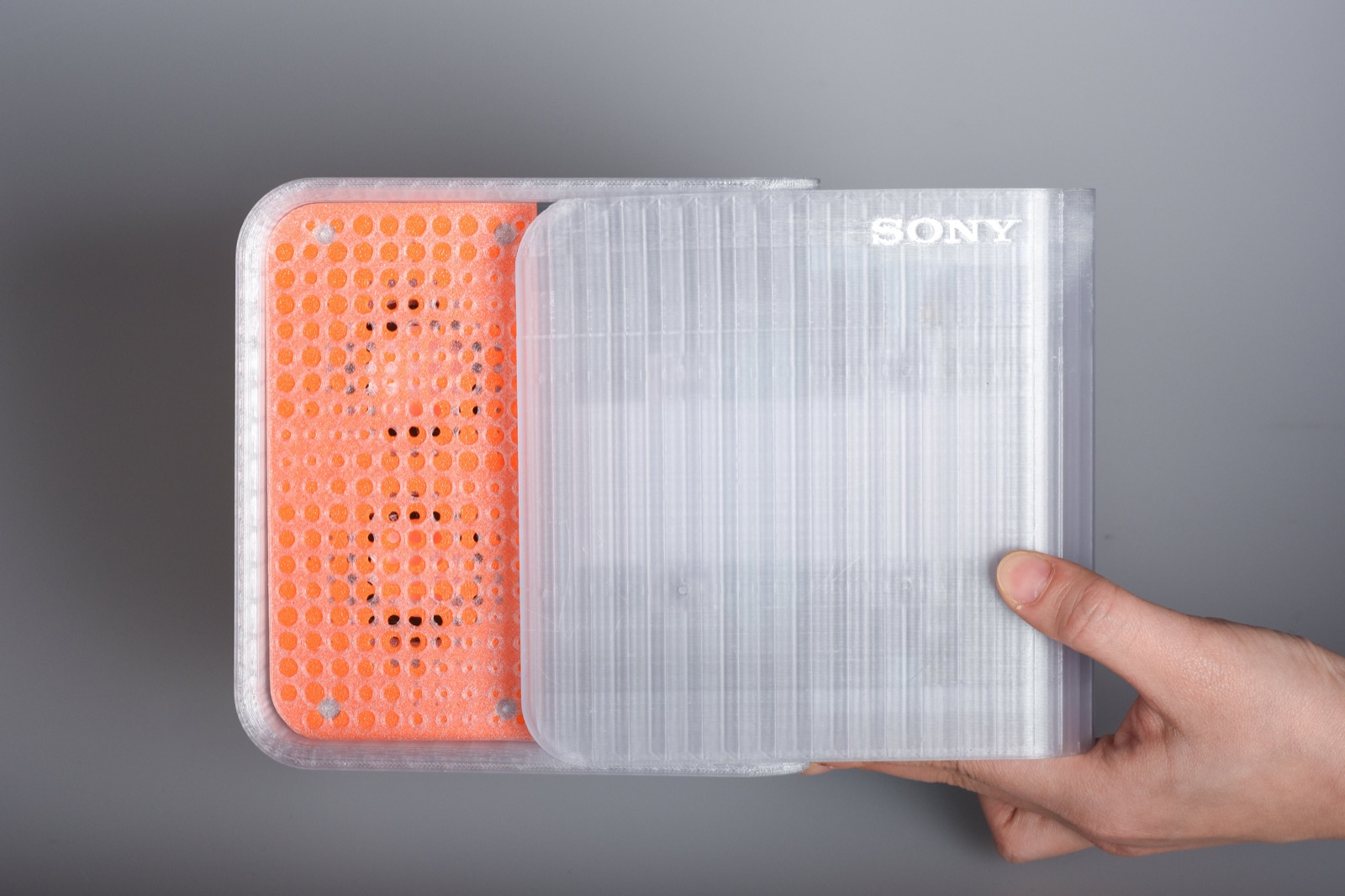
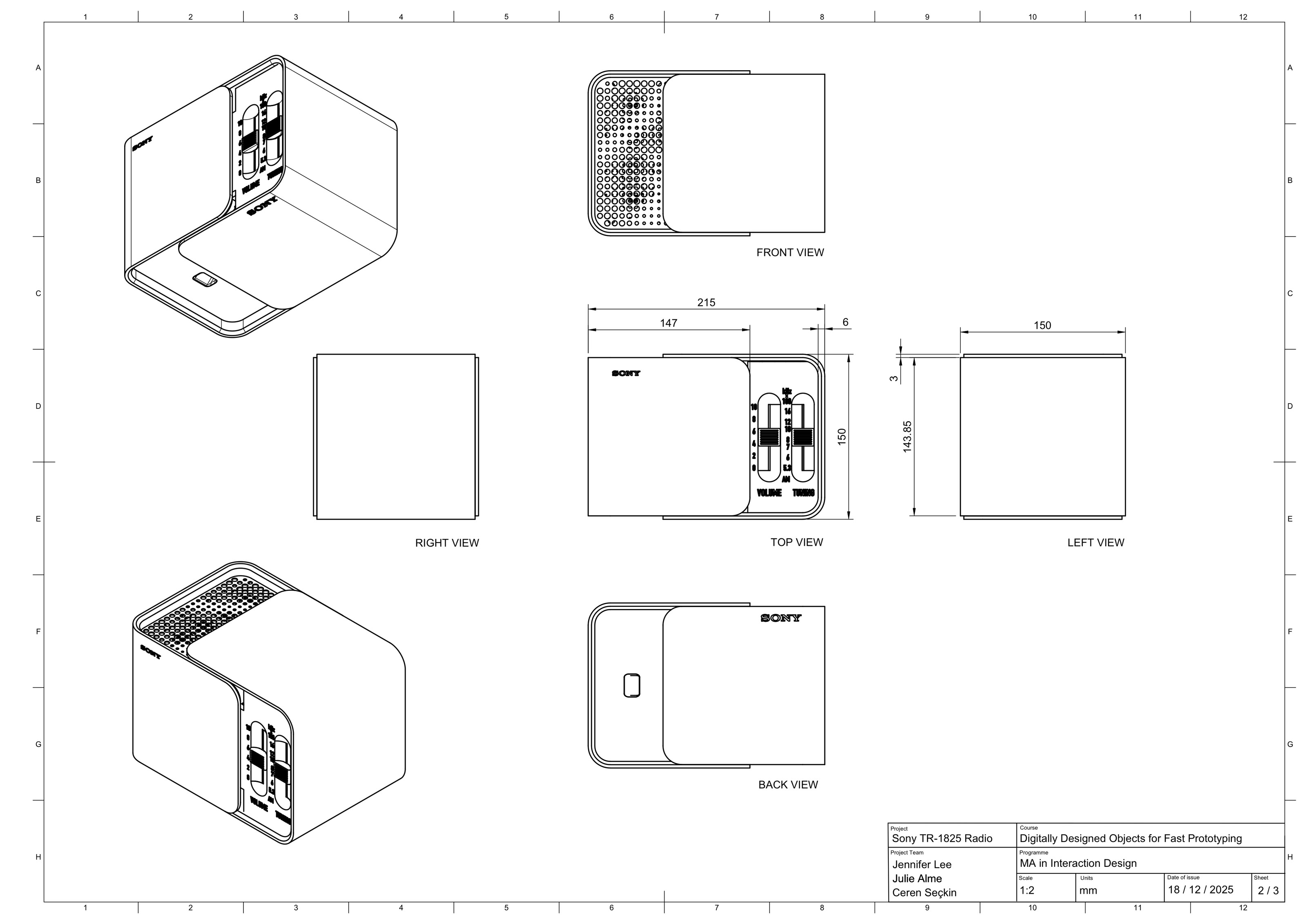
The outer shell slides outward, expanding the enclosure to 215mm. At full extension, a concealed limit switch activates the system, making the opening movement itself the power mechanism.
03
Active
The speaker and control interface become fully exposed. Two linear sliders regulate volume and station selection while audio playback begins immediately upon activation.
04
Closed again
Sliding the enclosure shut deactivates the system and retracts the interface back into the cube. The object returns to its closed resting state.
0:00 / 0:00
Reconstructed Mechanism
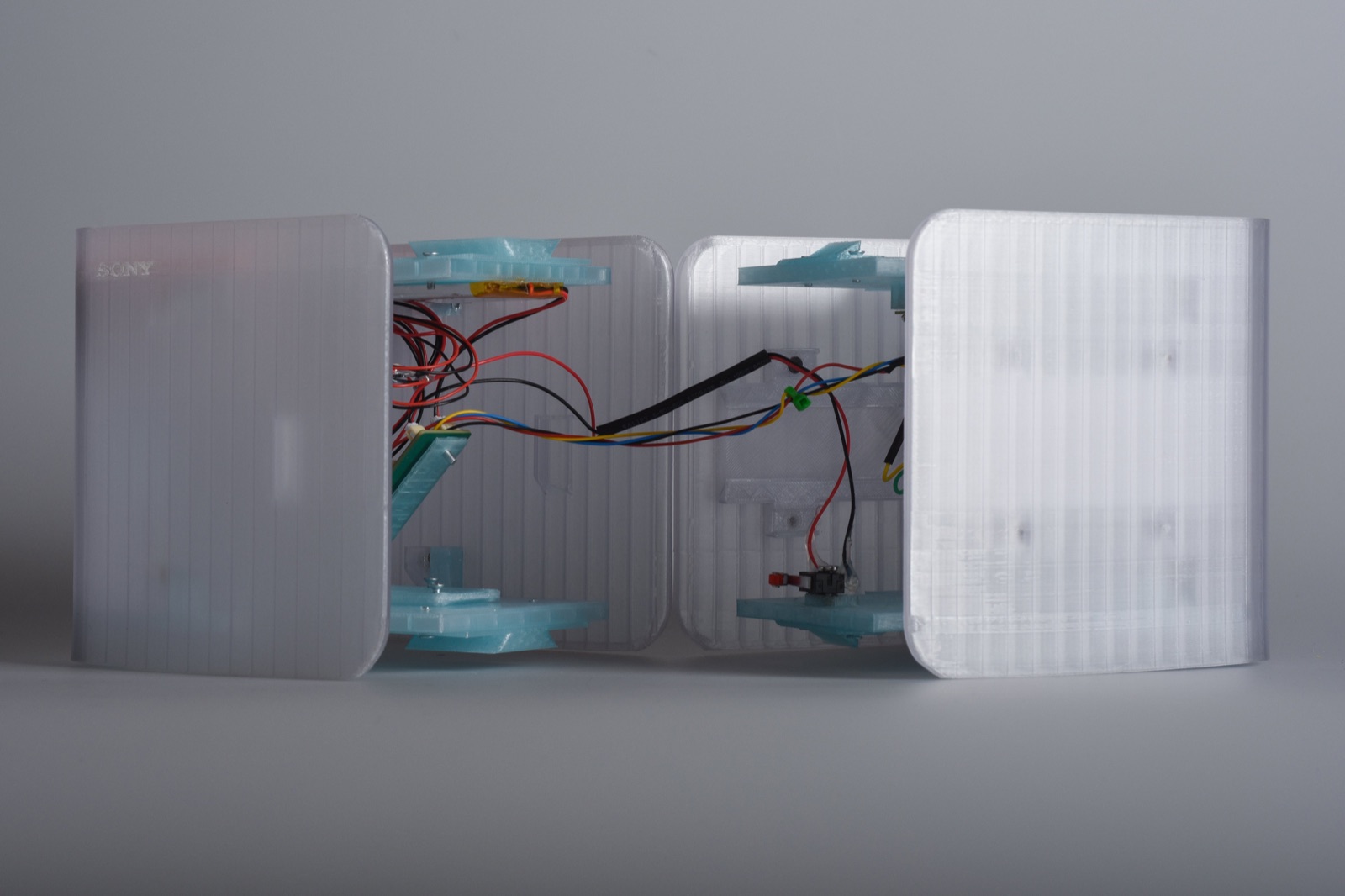
Rail system
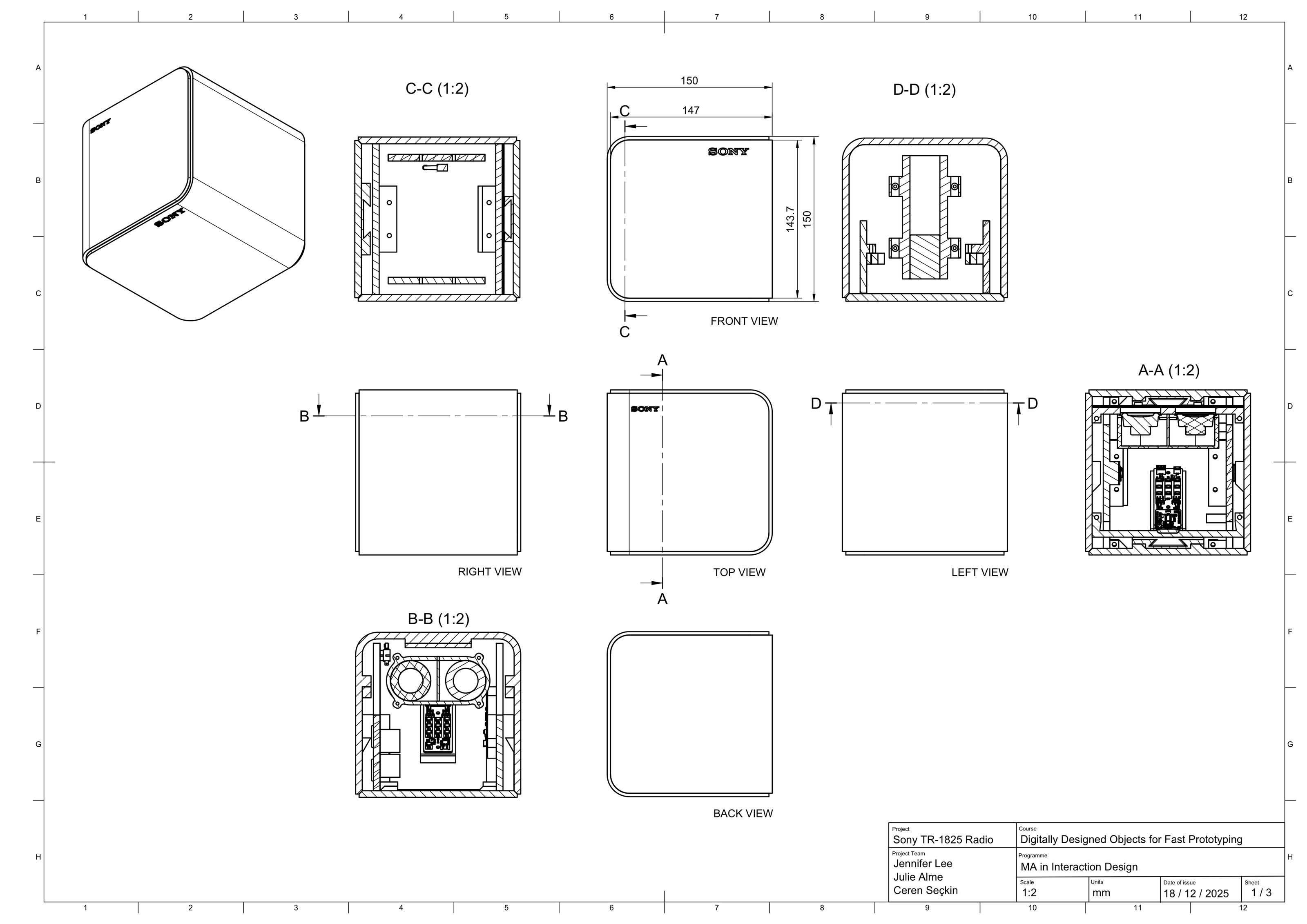
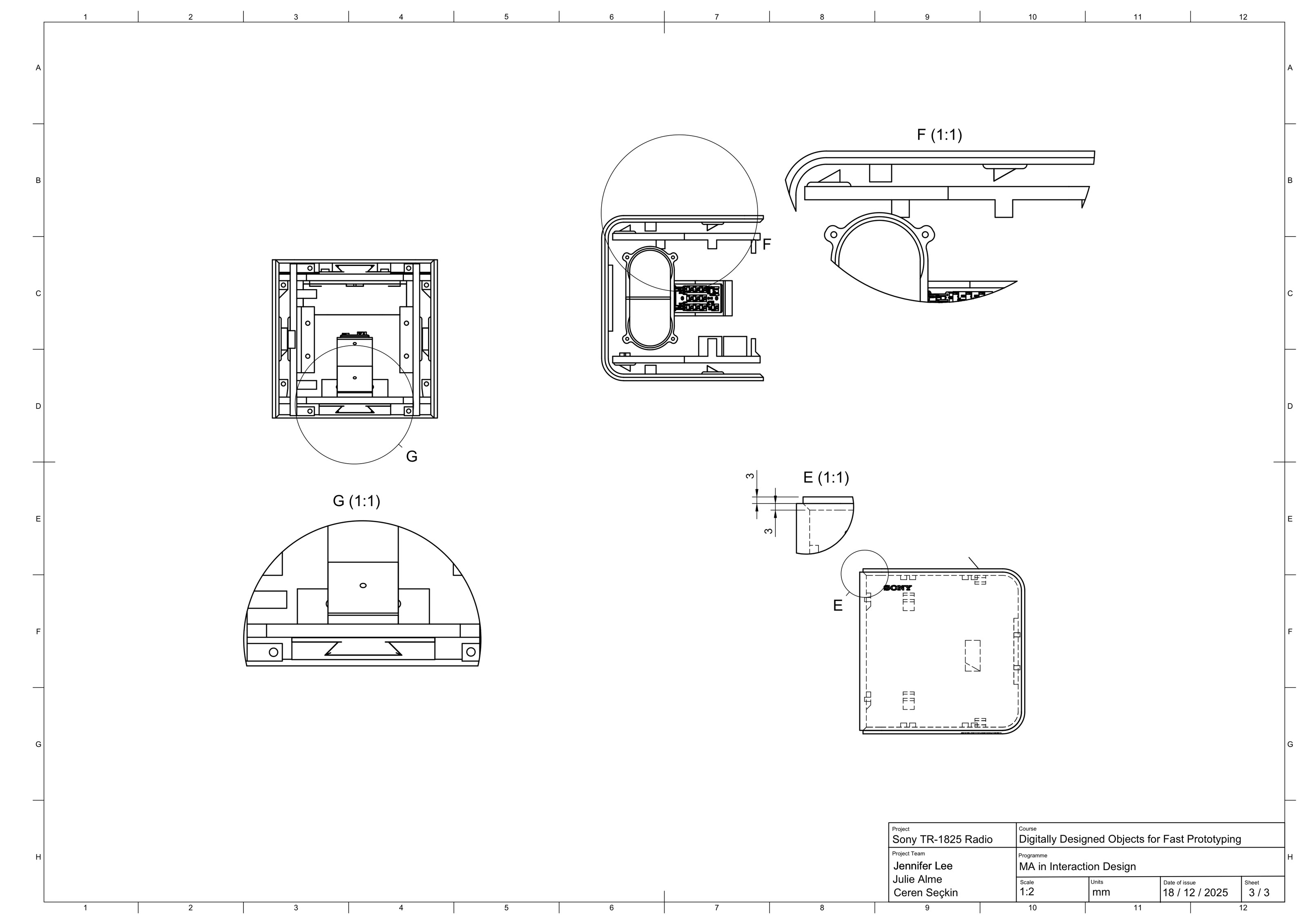
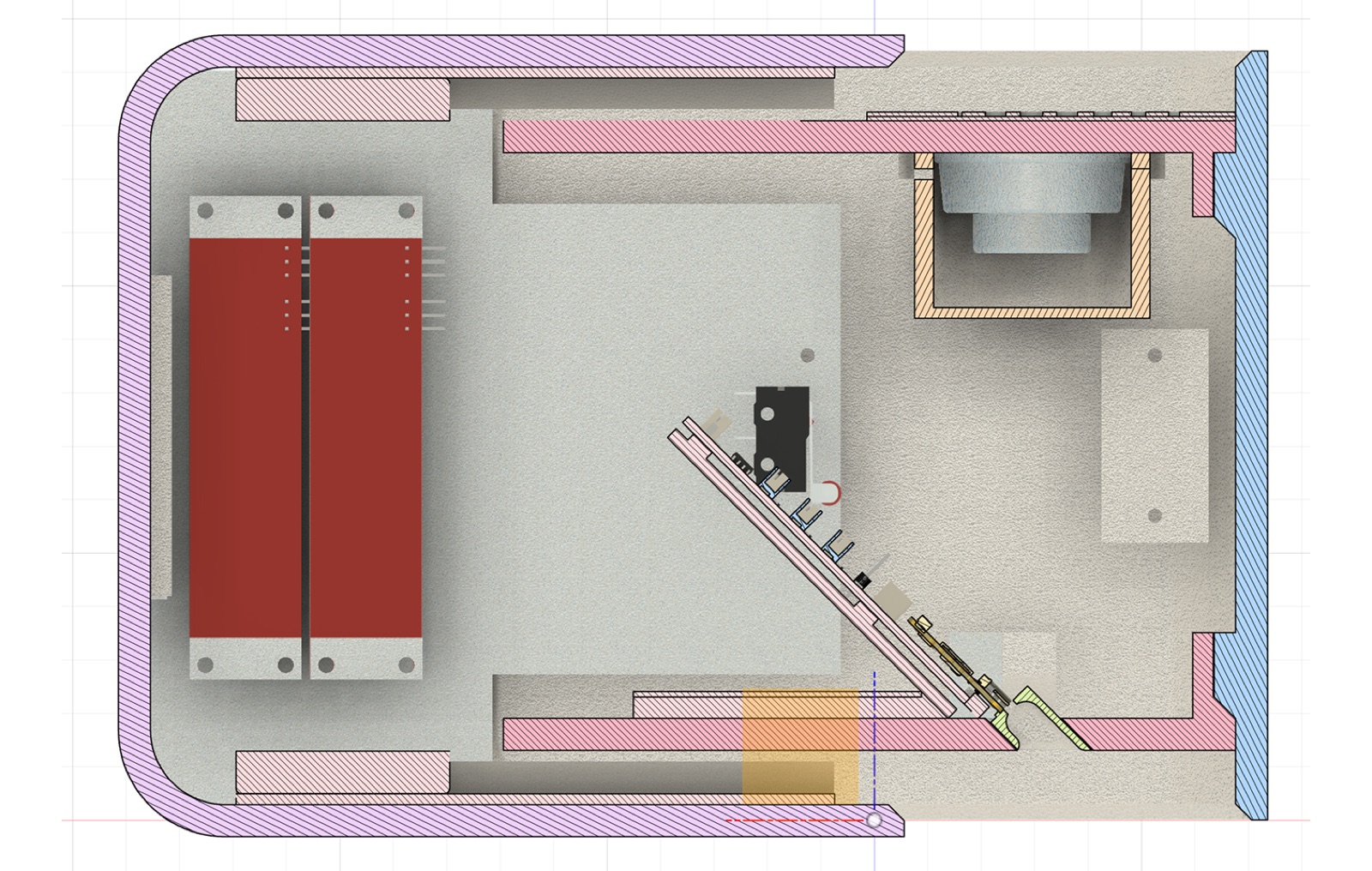
The original snap-fit structure could not be reproduced reliably through 3D printing. A new rail and stopper system preserves the sliding behavior through a different internal logic.
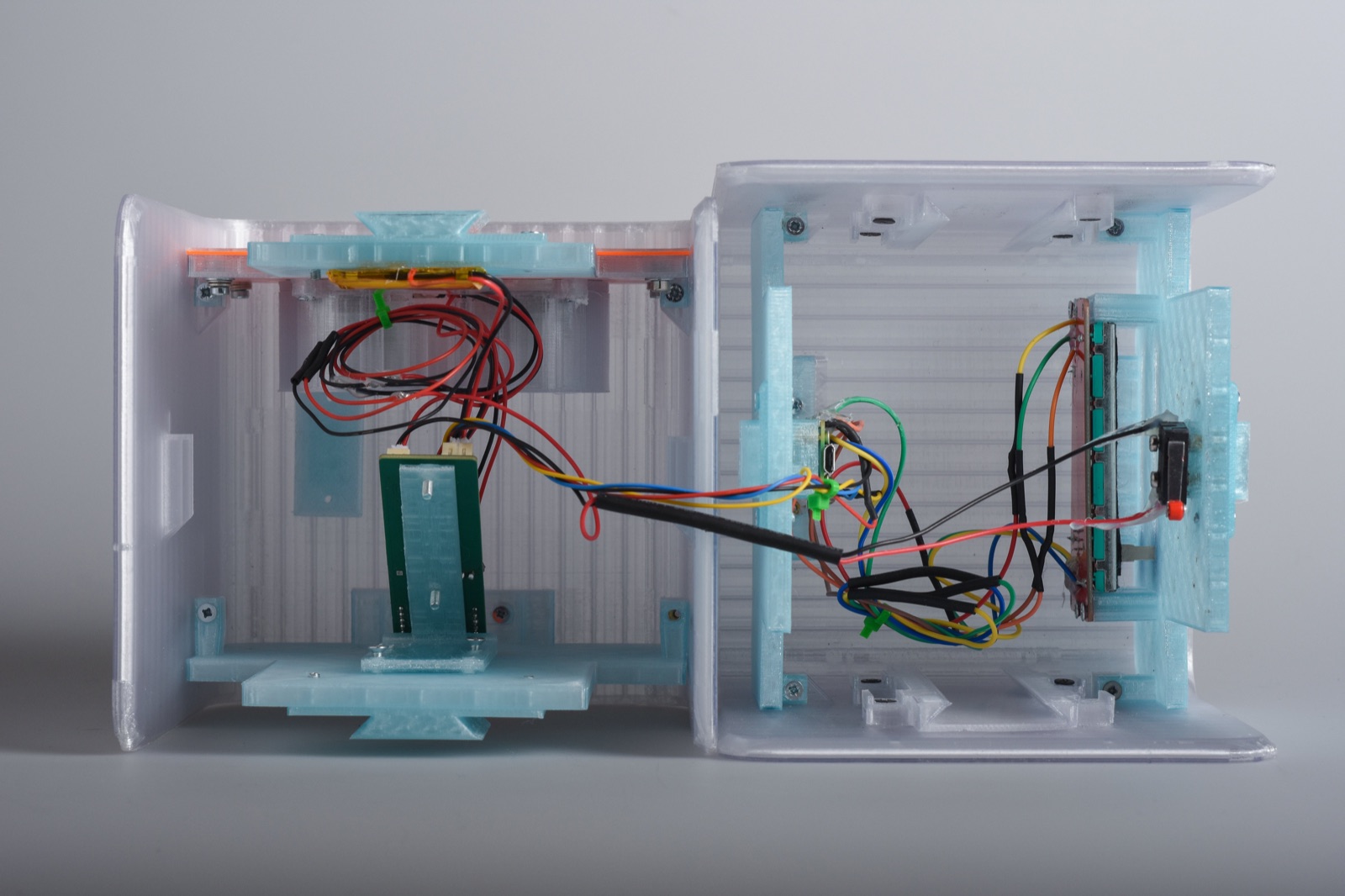
Embedded activation
A concealed limit switch activates the radio only at full extension, embedding power directly into the sliding movement of the enclosure.
Internal constraints
The sliding mechanism is embedded between the moving cases and interlocking panels, shaping the positioning of the internal electronics and supports.
Layered speaker grille
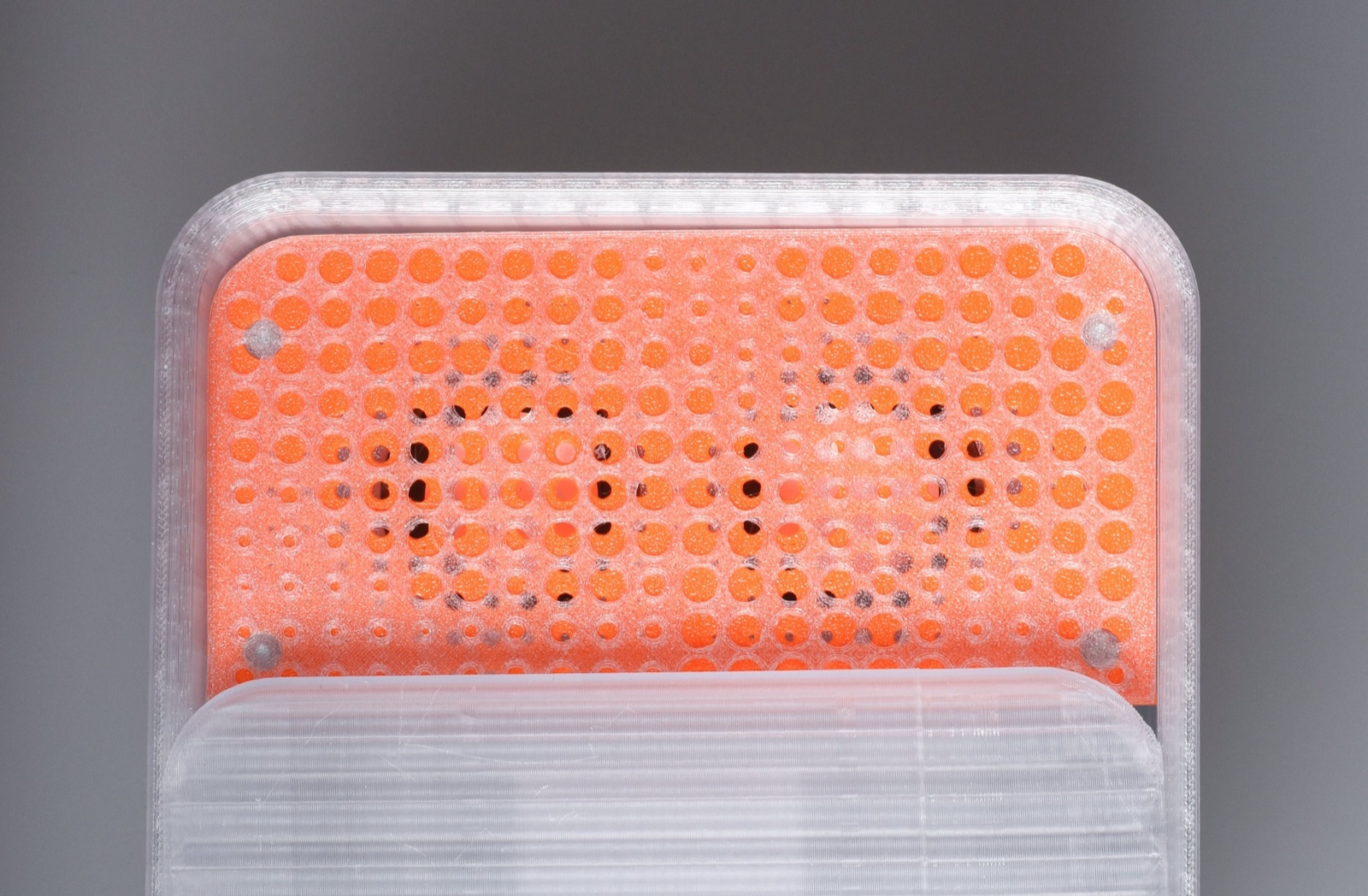
A Grasshopper-generated, 3D printed, double-layered orange grille distinguishes the speaker surface from the translucent enclosure.